A 3D small-world game where you navigate as a little bee hoping to locate his lost hive-mates and rebuild their hive!
- Platform: PC
- Engine: Unity 3D
- Date: January 2025 – May 2025
- Team Size: 12 people
- Watch the Trailer
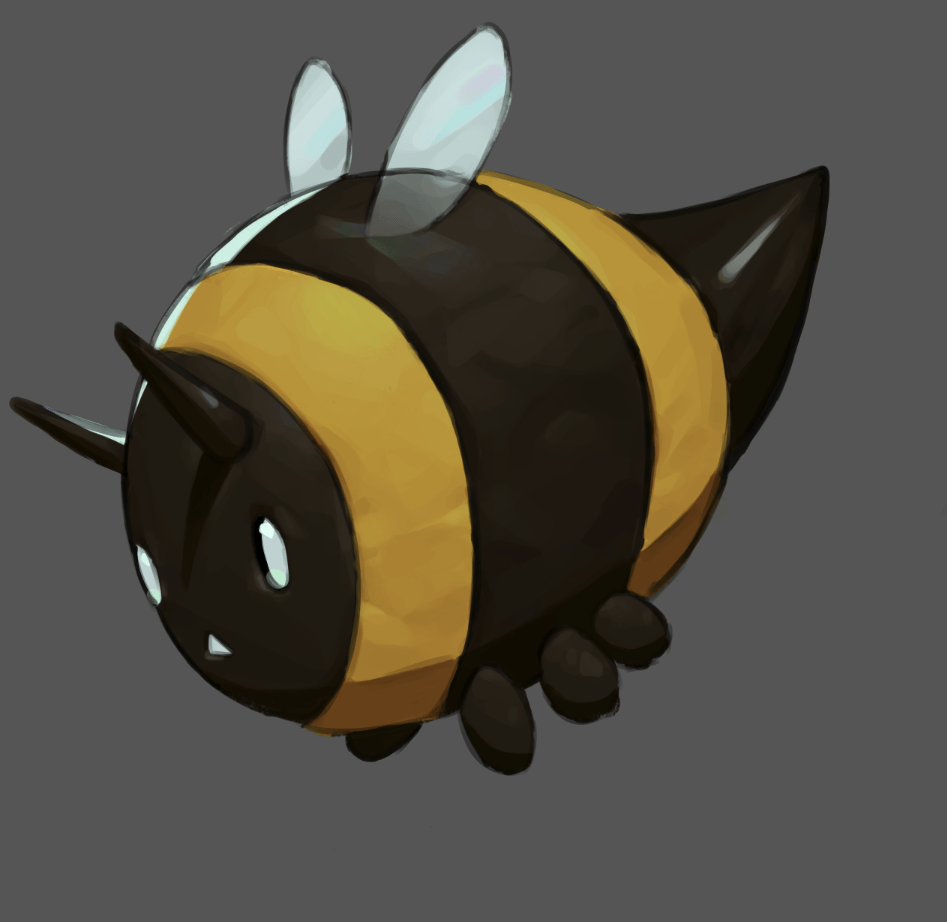
Along the course of the few months we had to work on this game, I really learned a lot, and this was the point in my college career where I really found my niche as a designer.
Summary
Our intent was to create a game that had an environmental theme, with a comedic twist to it, and it had to include dancing. In concepting we came up with an idea for a game about bees,the hazards they face due to humans, and how they dance to communicate with fellow bees.
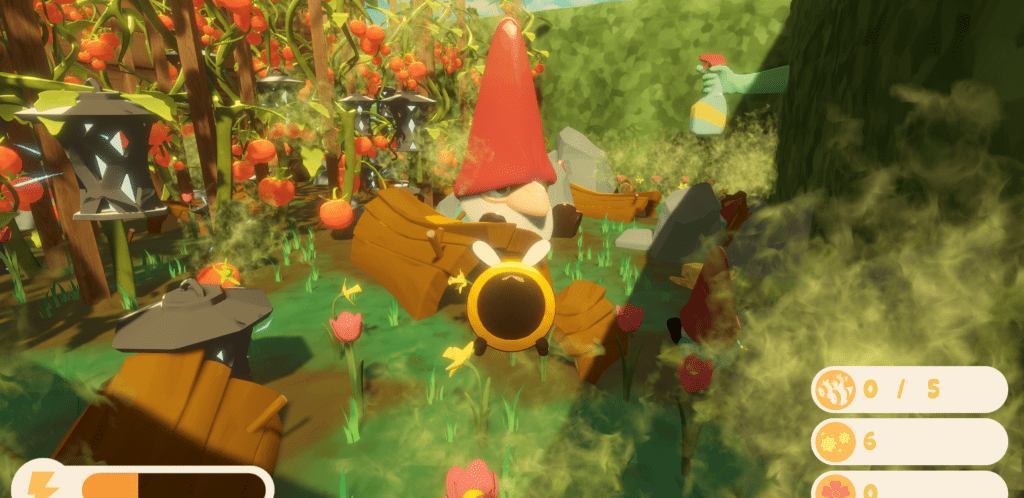
The game follows a little bee after the destruction of his hive, knocked down by humans. This little bee must go out to collect pollen and nectar, gather additional lost bees into his swarm by dancing, and complete tasks around the yard with his swarm. The final goal is to amass enough of your fellow bees to clear the yard of dangerous man-made hazards, and finally knock over a garden gnome to gain access to their lost honeycomb piece, vital for the hive’s rebuilding.
My Role
My role in this project was mainly a systems and mechanics designer. I worked on the original concepting, creating the gameplay loop and story along with other designers in order to shape the gameplay experience. My main job after the prototype phase was to continue fine tuning mechanics, and work on balancing for game feel.
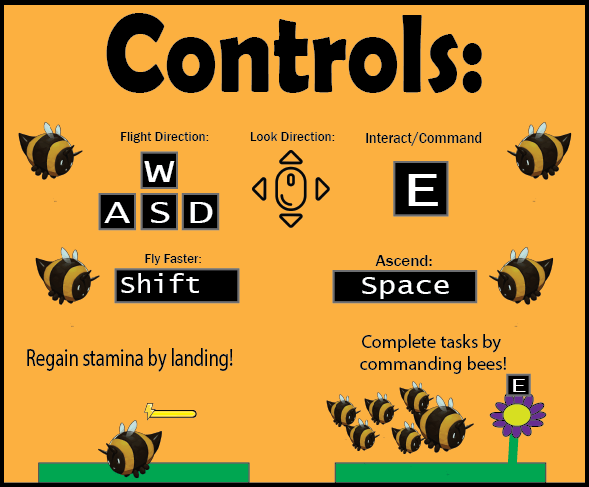
One of my largest parts in the project was balancing and testing movement in The Bee Game, giving it a feel that was fun and intuitive. Alongside programmers, we worked in a sort of “Flappy Bird” style of flying, with continous horizontal movement and rapid vertical ascension each time the player hit the spacebar. This made the bee bob up and down similar to a real buzzy little bee, and this both looked cute and felt fun to navigate. My work involved adjusting speed, ascension, descension, and other values in order to make the “Flappy Bird” bee flying enjoyable to a player.
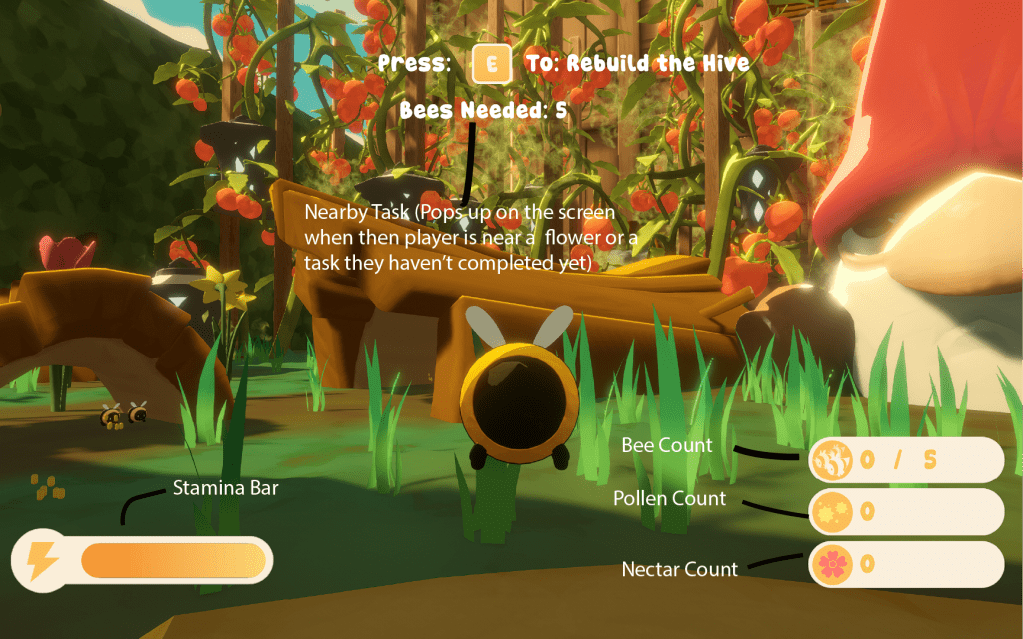
On top of that, I was also the designer for our game economy, making resource collecting vital to the game’s progression, but balancing it out in a way that felt enjoyable and not tedious. The bee needs to collect pollen to increase the maximum amount of bees he can have in his swarm, which then allows him to complete more tasks. To gain more bees, players can either explore and find them, or farm nectar from flowers to purchase more, as long as they have the capacity in their swarm.
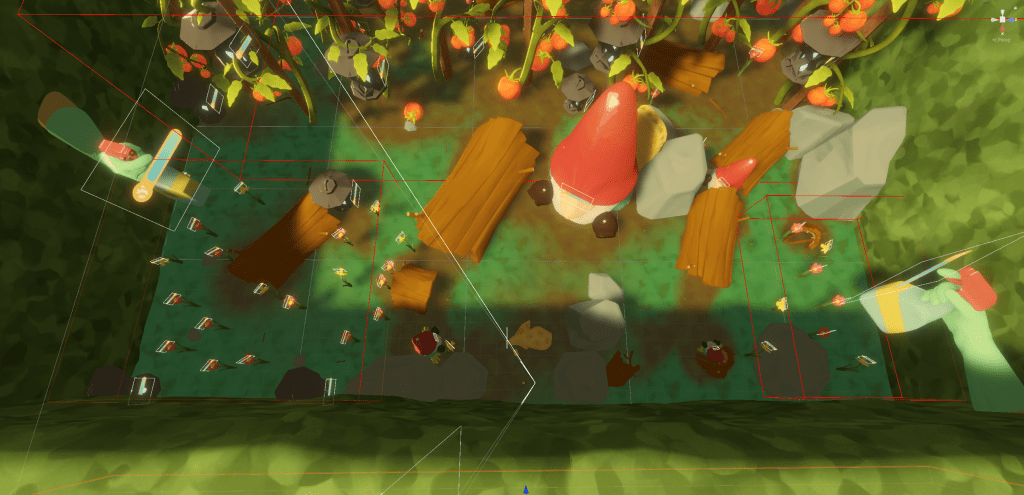
This tied into my level design work, creating an area that taught players how the game works, essentially walking them through the game loop in this little area. Once the player has the hang of things, they would realize they can now access the whole yard, and things expand from there.
Takeaways
Reflecting on it now, our team’s dynamic was good, but rocky in some aspects, and as I mentioned above, this project really taught me a lot. Initial problems were clear at first, with things like team size affecting the progress made.
We had a hard time dividing tasks and roles, causing some work to be done by one person, then taken over by another. On the other hand, some team members entirely owned their piece of work, and other’s didn’t know what to do with it. Communication wasn’t always constant, and this caused severe blocks as we got further into the game’s progress.
Despite this, we really did try hard to turn things around, and I always tried to help by taking on some things when necessary. There were a few occasions where I had to step out of game balancing to do level design last minute, and while stressful, it definitely helped to teach me adaptability, and to work outside my own sphere.
In the end, we were proud of the game, even if we didn’t hit our goal quality. We simply overscoped, and during our post-mortem discussion, we all shared what we felt we could improve on in the future. I mentioned I needed to improve communication, and while I got my work done, I didn’t communicate well with my team when it really mattered.
In future work, I really took this to heart, and in a project the following year, I made sure communication was at the forefront of my work ethic. Since then, I’ve noticed significant improvement in myself, and the work I put out due to this learning opportunity.
 Jacob Cruz, Get to Know Me