Inspired by the phrase “Bull in a China shop” you play as a bull running a tea shop, brewing drinks for adorable animal customers!
- Platform: PC, Virtual Reality(MetaQuest, HTC Vive)
- Engine: Unity 3D/VR
- Date: August 2025 – May 2026
- Team Members: 17
- Steam Page & Itch.io Page
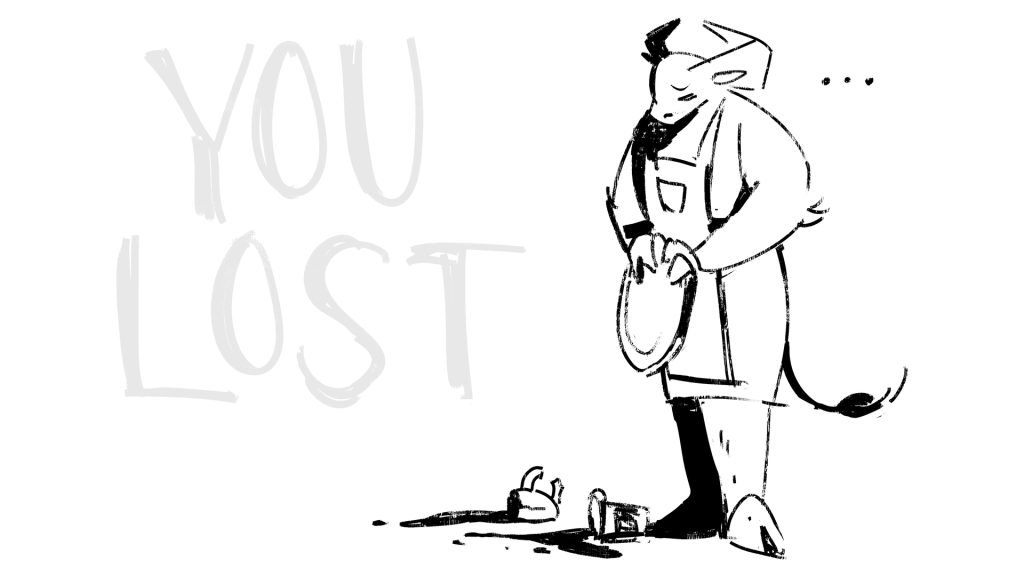
This game was my first real step into virtual reality. I really learned a lot from working on this game, and it taught me a lot about learning a new platform. I had to get used to new controls, new ways of designing, and I had to learn about a whole new demographic of gamers. This game was invaluable to my game design journey, giving me experiences I’ll never really forget.
Summary
The intent behind the original concept for BreakaBull was to create a fun tea making experience in VR, with a bit of added frustration due to the fact you are a bull with hooves instead of regular hands, making it a unique VR experience.
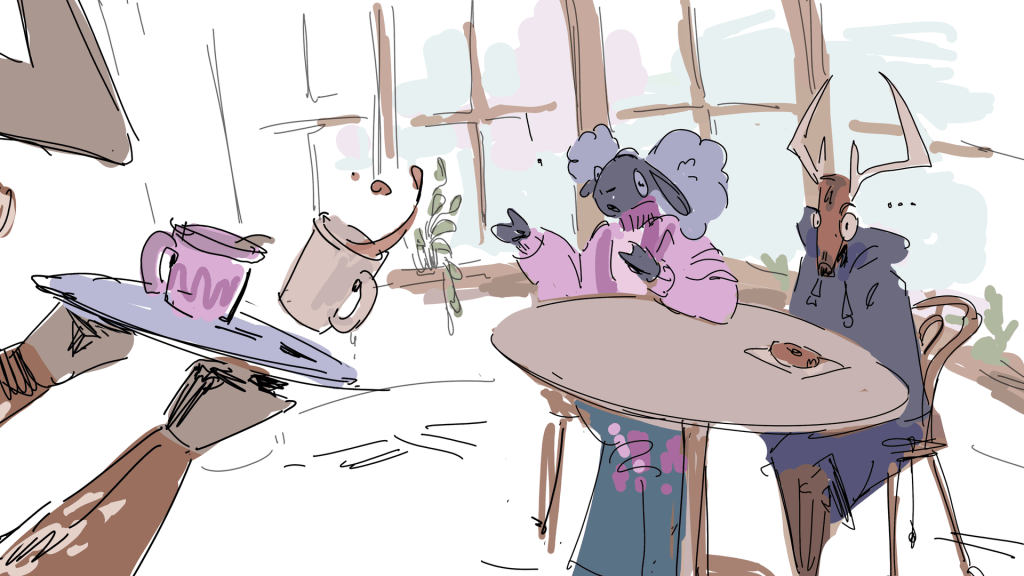
In BreakaBull, you play as an anthropomorphic bull who runs a tea shop. You must use your hooves to scoop and balance objects in order to make tea for the animal customers who enter your shop. As you make orders, you gain money to unlock new tea types using your office computer. Additionally, this computer can be used to order decorations to make the tea shop your own. Making tea in a tactile physics based game is difficult, especially with no proper hands, so you (the bull) tend to drop and break lots of items as you work through the game, but don’t let it get you down. To distract from the struggles, the bull can also interact with customers to talk to them and hear their stories, learning about all about them as they become regulars.
My Role
I was the one who originally conceptualized the game, pitching it to the original team in August, where we eventually settled on it. For the concept, I created a two-page document detailing the core parts of a VR cooking game, what brings in players, and how that relates to the concept I’m pitching. After detailing out some basic things such as setting, player character, and progression, I created a one paragraph pitch to communicate to my team and professor.
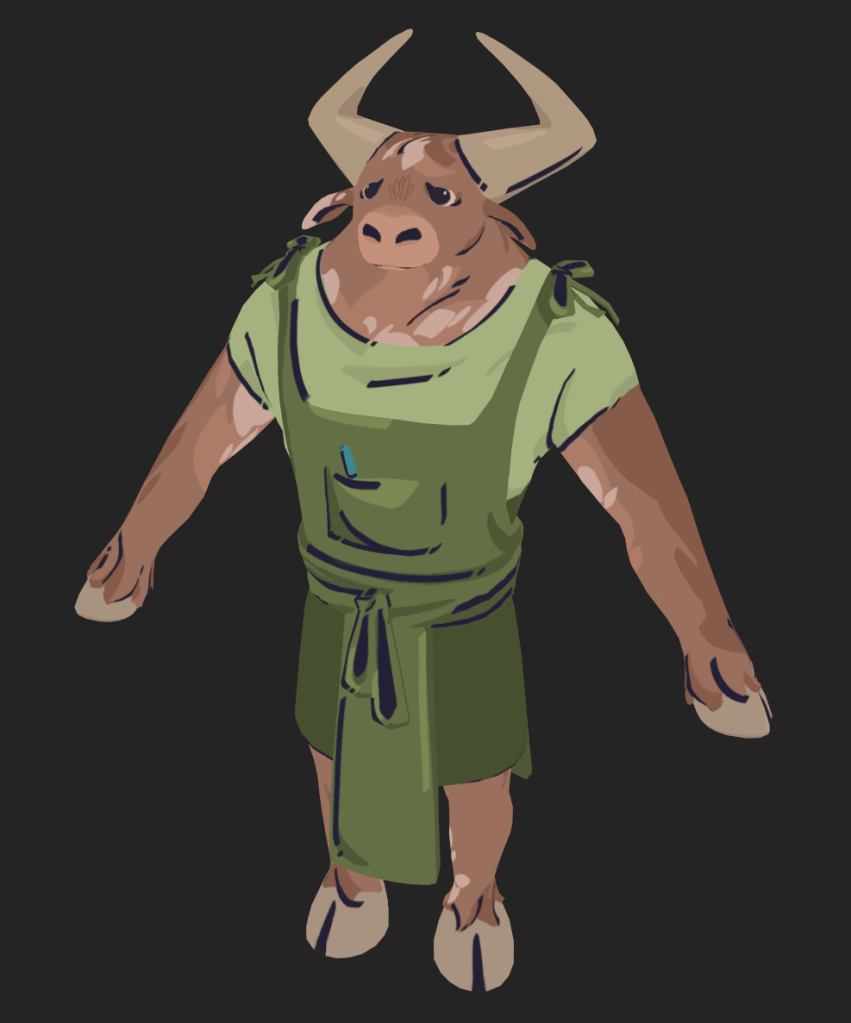
Entering the prototyping phase, I had a large focus on detailing out the systems of the game, creating documentation and helping programmers turn these systems into proper game mechanics to form the gameplay loop.
Once production started , I assisted in creating the systems/mechanics alongside programmers, doing internal testing, and also creating the general playspace for the player to create an easy flow through the gameplay loop.
My focus on level design was creating the play space for the player, and helping with the setting. Alongside other designers, I worked on the kitchen part of the tea shop, creating an environment which lended itself well to a smooth gameplay loop. By creating countertops which surround the player, I helped craft the play area to encourage them to do a physical loop while moving through the gameplay loop, making for easy muscle memory on each playthrough.
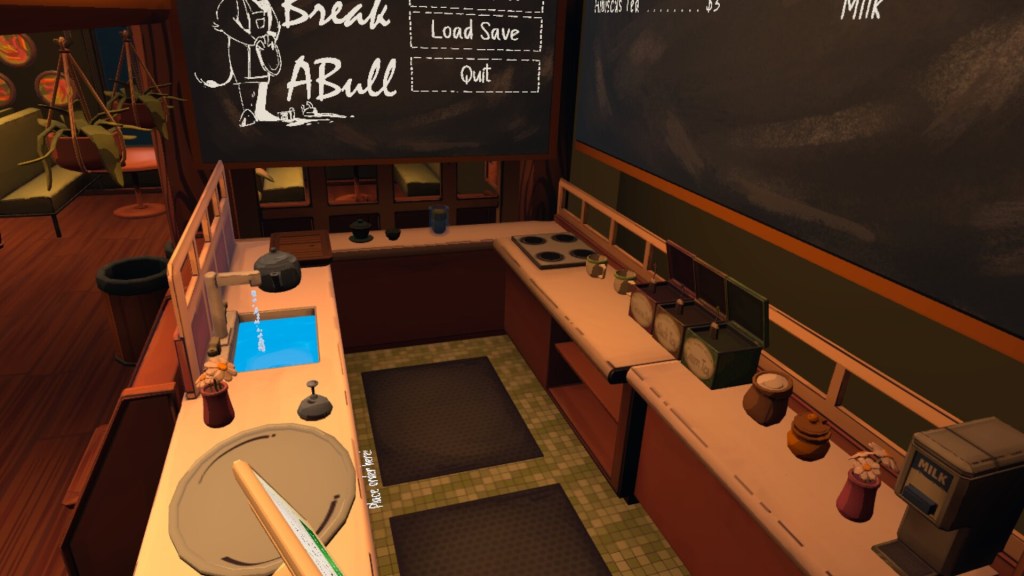
After receiving the greenlight to continue production into my second semester of Senior Year, I also helped guide the creative direction of the game, receiving the role of “product owner”. As the team grew, I continued to guide the team and the vision for the game, making decisions on scope, new mechanics, and implementation.
Takeaways
Working on this game came with many hurdles, but a lot of great triumphs, too. Originally, the team and I struggled to understand VR, how to work in it, how to test it, and how to create a fun player experience. After research on the platform and collaborating with each other, we eventually created an enjoyable prototype which was the start of BreakaBull.
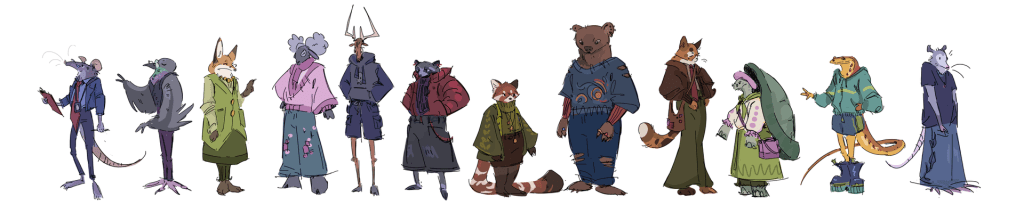
The project truly taught me a lot about interdisciplinary work, and how important work pipelines were. For example, creation of customers for the game came from my original concepts, handed to the artists for concept art and modeling, followed by programmer implementation, back to me for how they fit into the game and its systems, and finally they go through a narrative pass. When pipelines like this were disrupted by lack of communication or inconsistent work, the whole team could see the consequence. Throughout the project, streamlining these pipelines were essential, and I’d label it one of my biggest takeaways.
My final piece of retrospective is how important it felt for me to find a creative niche in this project. When I started to take ownership of ideas like systems and mechanics, or characters, or concepts, I found myself working with more passion. Prior to this project, I created systems and did my work, but it never felt like I had agency over it. When I worked harder to really own my ideas, it paid off when my team elected me Product Owner, stating I had the most vision for the future of the game. In this role, this creative niche, I felt more passion than ever for developing a game. I want to continue in the future really owning my ideas, to find my role in a production team to keep that passion for game design burning.
 Jacob Cruz, Get to Know Me